

Finding mold growing in your home is unsettling enough, but when that mold hides deep within your HVAC system, the concern escalates dramatically. Mold lurking unseen inside your heating and air conditioning can spread spores continuously throughout your home, turning a localized problem into a house-wide issue. For homeowners in Orange County, this scenario is likely due to our humid coastal climate and frequent use of air conditioning.
But how can you detect mold that’s growing out of sight? It’s a challenging problem because mold in HVAC systems doesn’t typically announce itself openly. Instead, subtle warning signs and indirect clues become your best tools for early detection. Knowing these signs and understanding why mold thrives in HVAC environments helps you protect your health and home, and recognize precisely when professional mold inspection Orange County services are necessary.
Below, we’ll explore how HVAC systems create ideal environments for mold growth, the key indicators of hidden mold in your HVAC system, the unique health risks posed by this hidden mold, and specific situations when mold inspection and mold testing Orange County homeowners trust are necessary.

Why Mold Frequently Grows in HVAC Systems
Mold isn’t random—it thrives in conditions precisely like those created within most HVAC systems. While many areas of your home can occasionally foster mold growth, HVAC systems often provide a combination of constant moisture, darkness, and a steady supply of nutrients that mold needs to establish significant hidden colonies.
- Constant Moisture and Poor Drainage Issues:HVAC units naturally generate condensation, especially during humid Orange County weather, when cool surfaces meet warm, moist air. While condensation is typical, issues arise when water doesn’t drain correctly and remains trapped in drain pans or ductwork.
- HVAC systems depend on properly functioning drainage to remove condensation. When drain pans or condensate lines clog or slope incorrectly, water stagnates, providing an ideal habitat for mold.
- Even small amounts of stagnant water inside HVAC components quickly create hidden, thriving mold colonies. This trapped moisture allows mold to multiply and spread rapidly, often unseen until the problem becomes severe.
- Dust and Debris Accumulation:Dust and debris naturally enter your HVAC system through normal air circulation, accumulating on air filters, evaporator coils, and duct surfaces. Mold feeds on this organic material, especially when combined with trapped moisture, rapidly multiplying inside dark, hidden spaces.
- HVAC air filters that aren’t regularly changed allow significant organic material accumulation, providing mold with the nutrition needed for sustained growth.
- If dust or debris enters porous duct liners or HVAC insulation materials, mold colonies can establish hidden, persistent infestations. Porous duct lining cannot be cleaned effectively once it is moldy, requiring complete replacement.
- Dark, Hidden Spaces:Mold thrives best in environments that are damp, warm, and shielded from direct sunlight—precisely the conditions provided by enclosed HVAC units and ductwork. These hidden, inaccessible areas allow mold to grow undisturbed for extended periods.
- Mold often grows undetected in hidden HVAC compartments, evaporator coils, and behind insulation, establishing colonies that steadily spread unnoticed.
- Homeowners usually remain unaware of HVAC mold until secondary signs appear, such as musty odors or persistent health symptoms, because these dark areas rarely receive regular inspection.
Recognizing Hidden Mold Signs in Your HVAC System
Mold inside HVAC systems rarely presents itself directly. Instead, subtle and indirect clues become essential indicators of a hidden problem. Identifying these early warning signs allows prompt action before mold contamination becomes widespread.
- Persistent Musty Odors:A consistent musty odor, especially when your HVAC system is operating, is one of the strongest indicators of hidden mold colonies. This distinctive smell often originates deep within ductwork or HVAC components, becoming more noticeable when air circulates throughout your home.
- Musty odors intensify when your HVAC system operates, indicating hidden mold deep within your ducts or air handlers.
- If these odors persist despite regular cleaning and filter changes, they strongly suggest deeper hidden mold colonies inside your HVAC system.
- Visible Clues Around HVAC Components:Mold often reveals itself through visible signs, particularly around vents, registers, or filters. Even subtle visual indicators can hint at more extensive mold contamination within hidden HVAC components.
- Dark or fuzzy discoloration near air vents, registers, or on your HVAC filters frequently indicates deeper hidden mold growth inside ducts or behind visible surfaces.
- Consistently dirty air filters or visible debris appearing rapidly after replacement can also indicate mold growth deeper inside your HVAC system.
- Persistent and Unexplained Health Symptoms:Persistent respiratory symptoms, allergy flare-ups, or unexplained health issues that intensify at home but improve away from your residence strongly suggest mold exposure from your HVAC system.
- If you or your family members experience ongoing respiratory irritation, such as coughing, sneezing, or congestion that consistently worsens indoors and improves outdoors, HVAC mold exposure may be the culprit.
- Unexplained allergy-like symptoms, headaches, fatigue, or chronic sinus infections correlating with time spent indoors also strongly indicate mold contamination hidden within your HVAC system.
Unique Health Risks of HVAC Mold Exposure
Mold exposure generally presents health risks, but mold inside HVAC systems poses unique challenges. Because your HVAC system constantly circulates air, mold contamination within your ducts or air handlers continuously spreads spores, creating pervasive, ongoing exposure for your household.
- HVAC mold distributes spores throughout your entire home every time your system operates, increasing the likelihood of prolonged and widespread respiratory irritation, allergies, or asthma attacks, especially among sensitive family members.
- Unlike localized mold growth in bathrooms or kitchens, HVAC mold actively circulates spores continuously, potentially intensifying respiratory issues or allergy symptoms for residents over extended periods.
When Professional Mold Inspection Orange County is Necessary for Your HVAC System
Recognizing the need for professional mold inspection or mold testing in Orange County requires understanding specific indicators that point toward HVAC mold contamination. Prompt inspection ensures accurate identification, allowing appropriate action before mold spreads further.
Call a professional mold inspector if you’re dealing with the following:
- Persistent musty odors emerge whenever your HVAC system runs, suggesting mold hidden deep within ducts or HVAC components.
- Family members experience persistent respiratory or allergic symptoms, particularly if these symptoms improve when away from home for extended periods.
- You see visible mold growth or discoloration around vents, registers, or HVAC filters, indicating possible deeper hidden mold.
- Your HVAC system recently experienced flooding or water damage, significantly increasing mold growth risks, particularly in hard-to-inspect hidden areas.
- System performance deteriorates unexpectedly, indicated by increased energy bills, reduced efficiency, or poor temperature regulation without other explanations.
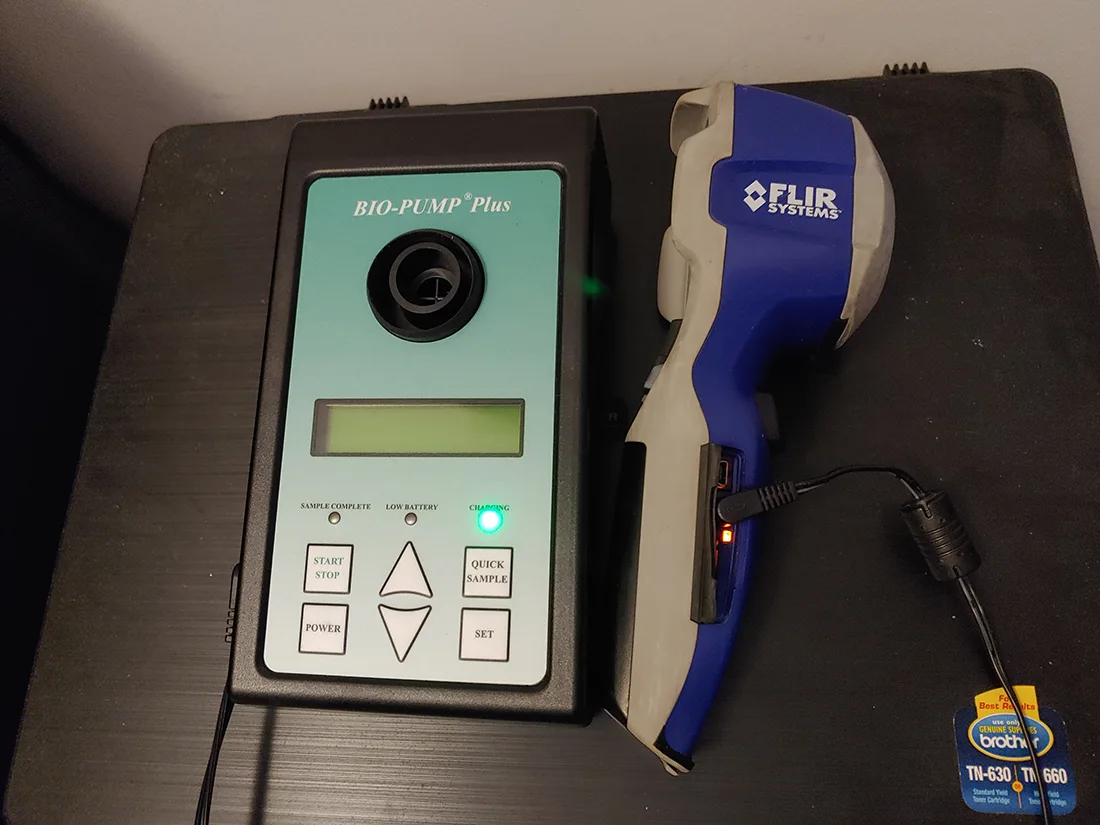
Professional mold testing in Orange County typically involves advanced methods, such as infrared imaging, moisture meters, and calibrated air sampling, to accurately identify the presence, severity, and exact locations of mold hidden within your HVAC system.
Ignoring HVAC Mold is Not an Option
Given the unique capability of HVAC mold to continuously circulate spores throughout your home, ignoring it is both dangerous and costly. Unlike mold growing in isolated areas, mold hidden in your HVAC system actively exposes everyone in your household to potentially harmful spores on a daily basis.
- Mold colonies inside HVAC units continuously distribute spores through the air you breathe, significantly increasing health risks compared to localized mold growth elsewhere in your home.
- Hidden HVAC mold issues escalate quietly and quickly, potentially causing extensive structural damage, reduced HVAC efficiency, and serious respiratory health complications when left unchecked.

Why MasterTech Environmental is Your Reliable Choice for Mold Inspection Orange County Services
At MasterTech Environmental, we understand the subtle nature and significant risks associated with HVAC mold. Our certified mold inspection specialists in Orange County utilize advanced infrared imaging, moisture detection tools, and comprehensive air and surface sampling to accurately identify mold within hidden HVAC components.
Our inspections clearly and precisely pinpoint the location, severity, and type of mold, allowing homeowners to make informed decisions about necessary remediation steps. If mold remediation in Orange County becomes essential, our experts will guide you transparently and efficiently through effective, safe solutions customized precisely to your home’s needs.
Ensure your home’s air remains safe, healthy, and mold-free by scheduling your comprehensive HVAC mold inspection today.